

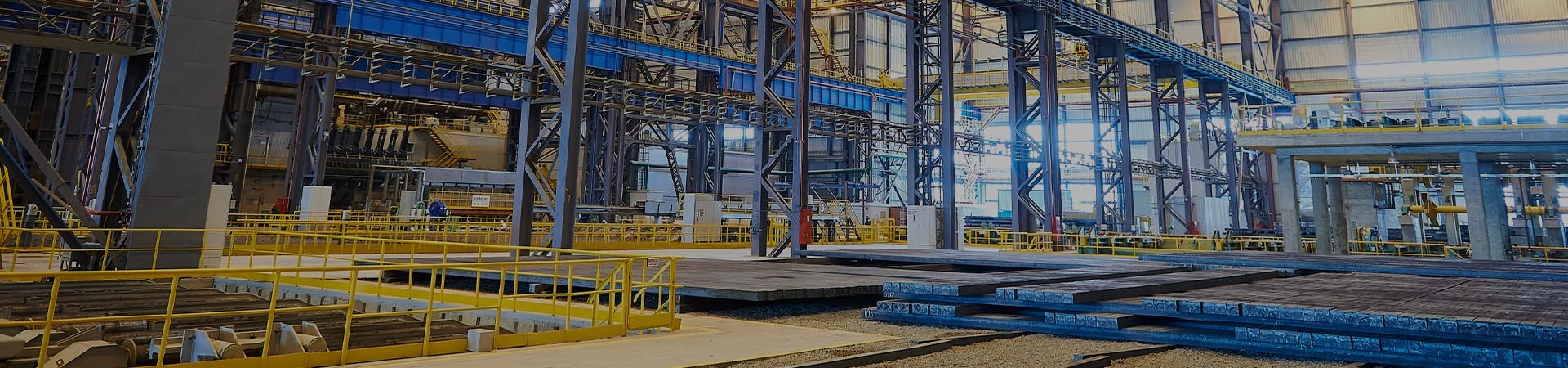
I. Analysis of China's Steel Market Situation in 2025
Review of China's Steel Market Trends in 2025
In 2025, the steel market in China will generally show a trend of first falling, then rising, and then falling again. During the first half of the year, steel prices continued to decline. The price drop of cold-rolled sheet was greater than that of hot-rolled materials. Stimulated by a series of macro favorable policies such as the "anti-crushing" policy issued by the Central Financial and Economic Commission on July 1st, in July, the domestic steel market price showed a V-shaped reversal trend. The prices of some varieties reached new highs for the year. From August to September, it was mainly a trend of fluctuating decline. In the fourth quarter, it operated in a range-bound manner.
From a phased perspective, in the first half of 2025, the price of steel products in China continued to fluctuate and decline. The main reasons were the imposition of tariffs by the Trump administration, weak downstream demand, weak market expectations, and the downward shift in the cost center of steel production. In particular, on April 2nd, the Trump administration imposed "equivalent tariffs" globally, causing significant fluctuations in global stock markets and commodity prices, and significantly affecting the steel market. Taking the Shanghai market as an example, by the end of June, the market prices of 20mm HRB400E rebar, 20mm Q235B medium-thick plates, 5.75mm * 1500 Q235 hot-rolled coil, and 1.0mm cold-rolled coil were 3120 yuan/ton, 3290 yuan/ton, 3210 yuan/ton, and 3670 yuan/ton respectively, compared with the prices at the end of 2024, they dropped by 270 yuan/ton, 240 yuan/ton, 230 yuan/ton, and 630 yuan/ton respectively; the average prices for the first half of 2025 were 3264 yuan/ton, 3451 yuan/ton, 3316 yuan/ton, and 4088 yuan/ton respectively, compared with the average price in 2024, they dropped by 301 yuan/ton, 234 yuan/ton, 334 yuan/ton, and 233 yuan/ton respectively.
Stimulated by a series of macroeconomic favorable policies issued by the Central Committee for Financial and Economic Affairs, such as "anti-overcapacity and expanding domestic demand", as well as the Central Urban Work Conference, the domestic steel market price in July showed a V-shaped reversal trend. The prices of major steel products generally rose, and some products even reached new highs for the year. By July 30th, the market prices of 20mm HRB400E rebar, 20mm Q235B medium-thick plates, 5.75mm*1500 Q235 hot-rolled coil, and 1.0mm cold-rolled coil in the Shanghai market were 3,430 yuan/ton, 3,490 yuan/ton, 3,500 yuan/ton, and 4,050 yuan/ton respectively, compared with the prices at the end of June, they had increased by 310 yuan/ton, 200 yuan/ton, 290 yuan/ton and 380 yuan/ton respectively. Among them, the prices of rebar and hot-rolled coil reached new highs for the year.
As a series of macro favorable stimulating factors gradually faded away in July, the market gradually returned to its fundamentals. From August to September, the steel prices showed a trend of fluctuating decline again. With the improvement of the profit levels of steel mills, the steel mills were basically operating at full capacity, while the seasonal demand recovery was not obvious. Coupled with the weakening effect of the "trade-in" policy, the characteristics of strong supply and weak demand in the market were prominent. The steel inventory gradually rose from the previous low levels to a moderately high normal level. However, the United States and China postponed tariffs twice on May 12th and August 12th, and the rush for exports led to a relatively rapid growth in foreign trade exports, which compensated for some of the insufficient domestic demand. The decline in steel prices was not significant.
After October, the domestic steel market generally showed a trend of fluctuating within a range. Specifically, after the National Day holiday, the confrontation between China and the United States intensified, which had a significant impact on capital and the black market. As a result, steel prices continued to decline. With the basic consensus reached in the Kuala Lumpur trade negotiations between China and the United States, as well as the positive impact of the meeting between the Chinese and US heads of state in South Korea, steel prices stopped falling and rebounded in late October. After that, as the positive impact of the US-China negotiations faded, the market returned to its fundamentals. Industrial steel, especially sheet steel, faced relatively large inventory pressure. Construction steel was affected by the reduction in production by steel mills and the supply-demand balance was basically balanced, with a price trend slightly stronger than that of sheet steel. However, the overall trend was a narrow range of fluctuation. By December 30, the market prices in Shanghai for 20mm HRB400E rebar, 20mm Q235B medium-thick plates, 5.75mm * 1500 Q235 hot-rolled coil, and 1.0mm cold-rolled coil were 3280 yuan/ton, 3300 yuan/ton, 3300 yuan/ton, and 3940 yuan/ton respectively. Compared with the end of 2024, they dropped by 100 yuan/ton, 230 yuan/ton, 130 yuan/ton, and 360 yuan/ton, and compared with the end of June 2025, they rose by 160 yuan/ton, 10 yuan/ton, 90 yuan/ton, and 270 yuan/ton.
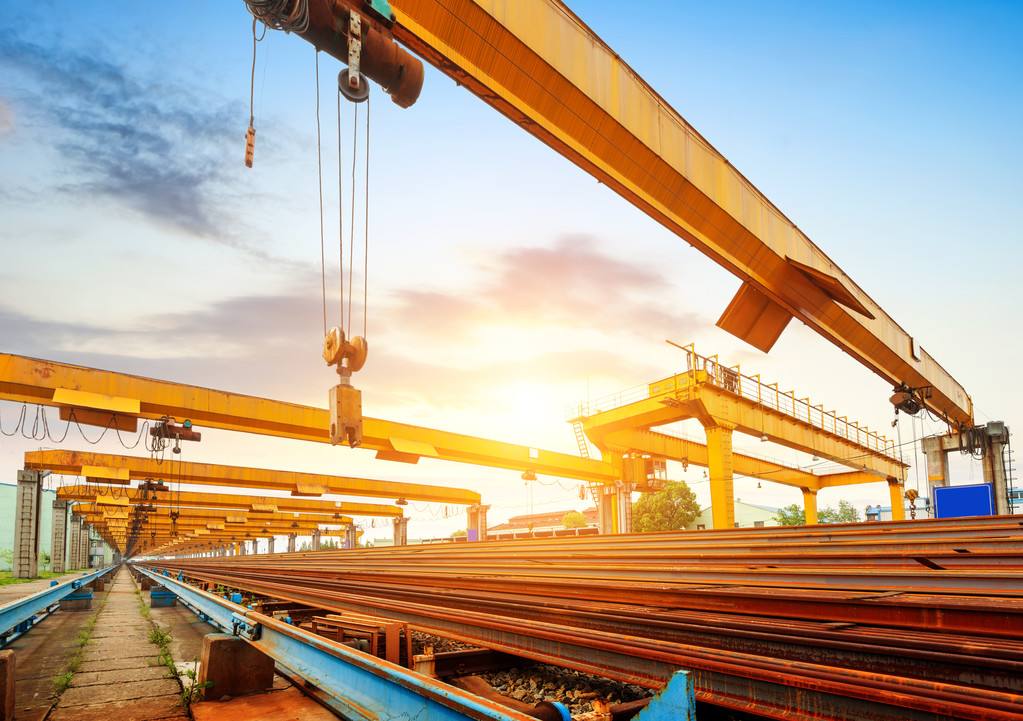
2. Characteristics of China's steel market in 2025
2.1. The price of construction steel has dropped, while the output of sheet steel has increased. The ratio of steel products remains at a high level.
From January to November 2025, the production of crude steel and pig iron in China showed a slight decline, while the output of steel maintained a rapid growth. According to the data released by the National Bureau of Statistics, in the first 11 months, the production of crude steel, pig iron and steel in China was 89166.5 million tons, 77404.6 million tons and 133277 million tons respectively, with year-on-year decreases of 4%, 2.3% and growth of 4% respectively.
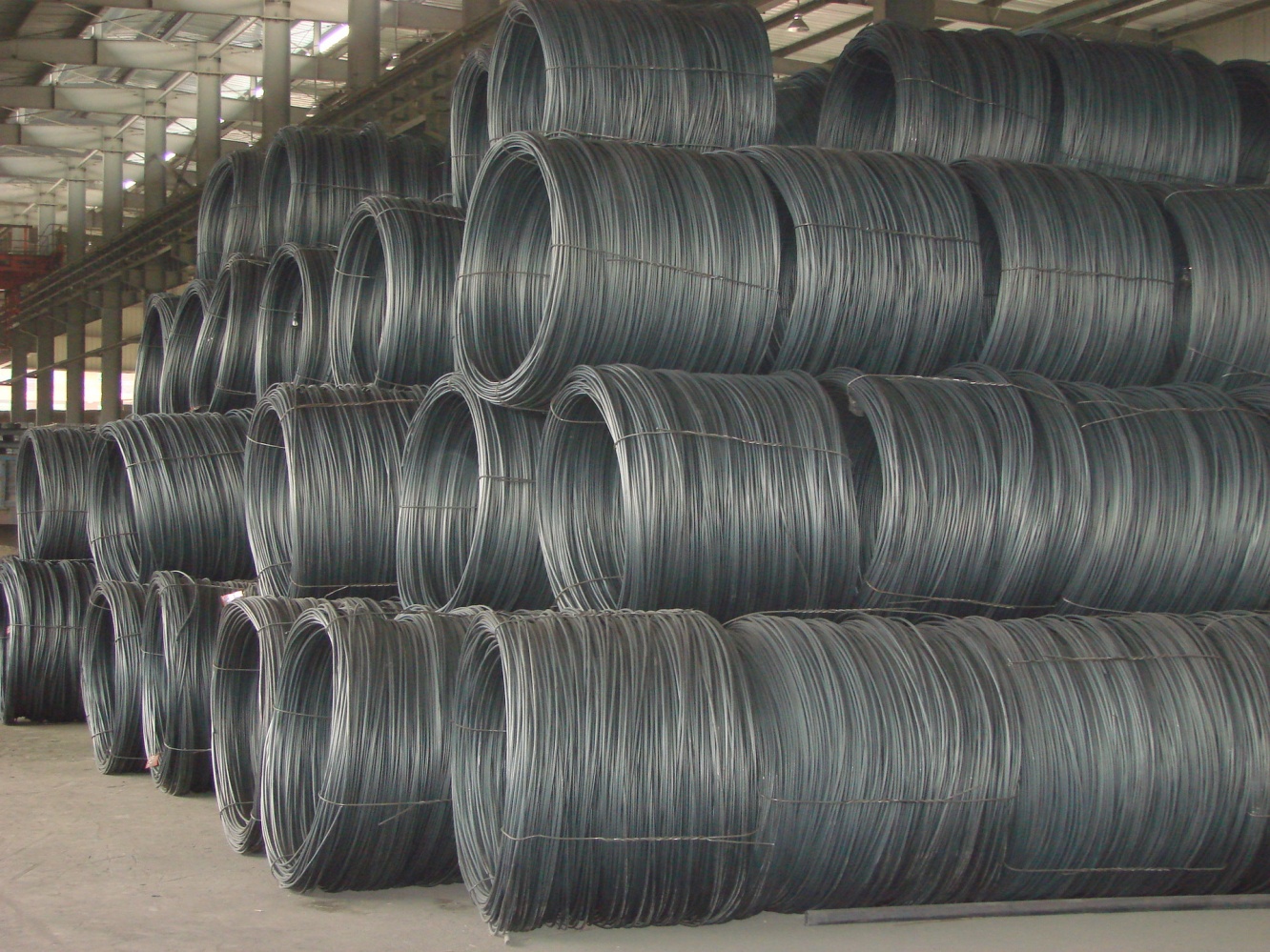
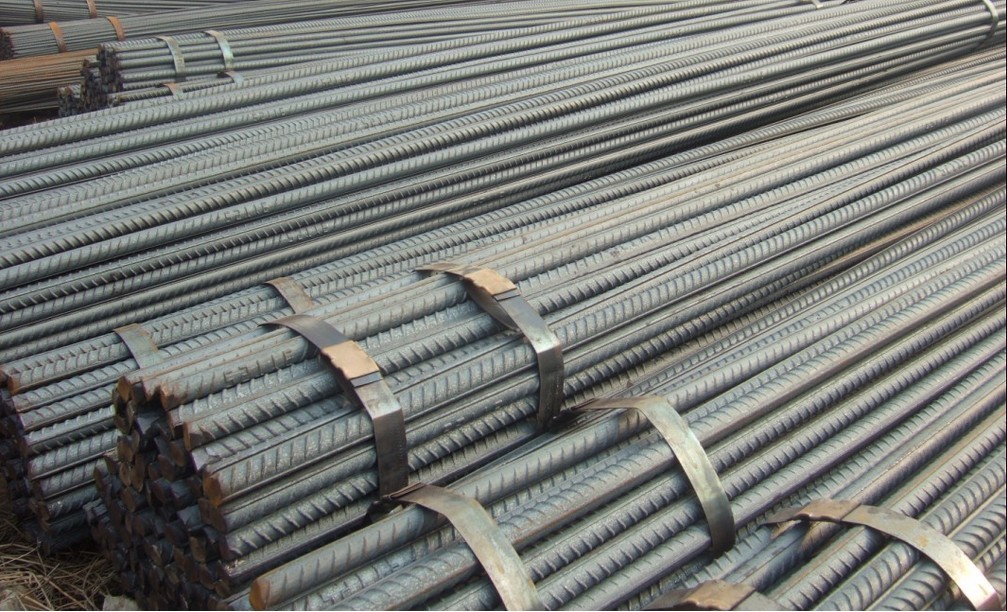
In terms of major steel varieties, the production of rebar and wire rod continued to decline, while the production of medium-thick wide steel strips and cold-rolled thin plates increased rapidly. According to statistics, from January to November, the production of rebar was 172.953 million tons, a year-on-year decrease of 3.2%; the production of wire rod was 123.021 million tons, a year-on-year decrease of 0.6%; the production of cold-rolled thin plates was 44.348 million tons, a year-on-year increase of 7.7%; the production of medium-thick wide steel strips was 205.313 million tons, a year-on-year increase of 0.6%.
In 2025, the iron-to-steel ratio and the material-to-steel ratio in China will be relatively high. Based on the published production figures, the iron-to-steel ratio for the first 11 months of the year was 0.87, which is the highest level in the past 9 years and is roughly equivalent to the situation before and after the supply-side reform in 2015-2016. The ratio reached its peak of 0.91 in October. The material-to-steel ratio for the first 11 months was 1.49, the highest level in recent years. It peaked at 1.69 in September and remained above 1.65 in October and November.
2.2. The average price of domestic steel has reached a new low in the past 9 years, and the fluctuation range has narrowed.
In 2025, the price center of steel in China continued to decline, and the annual average price reached a new low since 2017. According to the data from the Steel Home website, the average value of the comprehensive price index in 2025 was 3,754 yuan, a decrease of 342 yuan/ton compared to the previous year's average value. This was the lowest year since 2017, with a fluctuation range of 3,601 - 3,905 yuan/ton, and a fluctuation amplitude of 304 yuan/ton, which was also the smallest fluctuation amplitude since 2017. Major varieties: In 2025, the average price index of rebar was 3,287 yuan, and the average price index of hot-rolled coil was 3,416 yuan, both being the lowest average values since 2017.
2.3. Chinese steel enterprises' profits improved, but were lower than the average level of enterprises.
In 2025, the profit level of China's steel industry improved, reaching the best level since 2022. According to the statistics of the China Iron and Steel Association, from January to October 2025, the key steel enterprises achieved a profit of 104.19 billion yuan, with a profit margin of 2.1%. Among them, the profit in October was 7.935 billion yuan, with a profit margin of 1.6%. Additionally, according to the data from the National Bureau of Statistics, from January to November, the black metal smelting and rolling processing industry (steel industry) achieved a profit of 111.5 billion yuan, with a profit margin of 1.6%. Among them, the profit in November was 6.18 billion yuan, with a profit margin of 0.9%. The profit margins of the key steel enterprises and the entire industry both reached the best levels since 2022. However, among the 41 industrial enterprises listed by the National Bureau of Statistics, the profit margins were significantly lower. According to statistics, from January to November, the industrial enterprises achieved a profit of 6,626.9 billion yuan, with a profit margin of 5.3%, significantly higher than the profit margin of 1.6% in the steel industry. The profit level of steel enterprises ranked the second-to-last among the 41 industrial enterprises, and the profit margin was at a low level.
2.4. Steel exports continued to increase, and the export structure changed.
In 2025, China's steel exports will continue to increase, especially the export of steel billets will see a significant growth. According to customs statistics, from January to November, China's cumulative steel exports reached 107.72 million tons, an increase of 6.7% compared to the same period last year; cumulative steel imports were 5.54 million tons, a decrease of 10.5% compared to the same period last year. In terms of steel billet exports and imports, from January to November, steel billet exports reached 13.38 million tons, an increase of 7.815 million tons compared to the same period last year, representing a growth of 140.4%. Among them, the exports in July and August were 1.58 million tons and 1.76 million tons respectively, setting consecutive monthly export records. Based on steel imports and exports as well as steel billet imports and exports, when converted into crude steel, from January to November, China's cumulative crude steel exports reached 127.97 million tons, an increase of 14.98 million tons compared to the same period last year, representing a growth of 13.3%; cumulative crude steel imports were 6.54 million tons, a decrease of 1.8 million tons compared to the same period last year, representing a decline of 21.5%.
Unlike in 2024 when the main export of steel in China was in the form of plates, in 2025 the increase in steel exports mainly came from long products. According to customs statistics, from January to November, China exported 23.96 million tons of various long products, an increase of 7.03 million tons year-on-year, representing a growth of 41.5%; exports of various plates were 66.45 million tons, a decrease of 2.22 million tons year-on-year, representing a decline of 3.2%; and steel pipe exports were 11.23 million tons, an increase of 1.39 million tons year-on-year, representing a growth of 14.1%.
II. Outlook for the Steel Market in 2026
The fiscal and monetary policies will maintain a loose stance, and liquidity will continue to increase.
The Central Economic Work Conference was held in Beijing from December 10th to 11th. The key points are as follows:
① Regarding this year's economic work: The overall operation of the economy in our country has been stable and with progress. We have implemented a more proactive and effective macro policy, and the main goals of economic and social development will be achieved smoothly.
② Setting the tone for next year's economic work: A general guideline: steady progress with growth; Two better overall considerations: better coordination of domestic economic work and international economic and trade struggles, and better integration of development and security; Three policy requirements: implement more proactive and effective macro policies, enhance policy foresight, targeting, and coordination; Four efforts: continuously expand domestic demand, optimize supply, improve the creation of new increments, revitalize existing resources, deepen the construction of a unified national market, and continuously prevent and resolve risks in key areas; Continue to emphasize four stabilizations: focus on stabilizing employment, stabilizing enterprises, stabilizing the market, and stabilizing expectations, and promote the economy to achieve effective qualitative improvement and reasonable quantitative growth.
③ Continue the positive and proactive policy orientation, emphasizing counter-cyclical and cross-cycle regulation. Continue to implement a more proactive fiscal policy and a moderately loose monetary policy. Consider promoting stable economic growth and reasonable price recovery as an important aspect of monetary policy. Flexibly and efficiently utilize various policy tools such as reducing reserve requirements and lowering interest rates, and increase the intensity of counter-cyclical and cross-cycle regulation.
④ Eight key tasks, emphasizing domestic demand as the main driver. We must adhere to the principle of prioritizing domestic demand and build a strong domestic market; we should promote innovation-driven development by accelerating the cultivation and expansion of new growth drivers; we should intensify reform efforts to enhance the impetus and vitality for high-quality development; we should promote international cooperation in various fields to achieve mutual benefits; we should pursue coordinated development to promote integration between urban and rural areas and regional cooperation; we should lead with the "carbon neutrality" strategy to drive comprehensive green transformation; we should prioritize the well-being of the people and strive to do more for the benefit of the public; we should safeguard the bottom line and actively and steadily address risks in key areas.
In addition, the Central Economic Work Conference has several new propositions: Firstly, it for the first time pointed out that the contradiction between supply and demand is particularly prominent; Secondly, it for the first time proposed to promote investment to stop falling and stabilize; Thirdly, it again mentioned rectifying the kind of internal competition that is overly competitive; Fourthly, it again mentioned reducing the inventory of real estate; Fifthly, it again mentioned allowing prices to rise reasonably.
In conjunction with the Central Political Bureau meeting on December 8th, the macro policy orientation for next year is "direction remains unchanged, with moderate strengthening". The unchanged direction means continuing to implement a more proactive fiscal policy and a moderately loose monetary policy. The moderate strengthening means increasing the intensity of counter-cyclical and cross-cycle regulation. Personally, I believe that the scale of new special bonds in China in 2026 is expected to be around 4.6 trillion yuan, an increase of 200 billion yuan compared to 2024; the ultra-long-term special government bonds are around 1.5 trillion yuan, an increase of 200 billion yuan compared to 2024; the deficit rate will remain at 4% or slightly higher, and the deficit scale will be around 6 trillion yuan; the growth rate of broad money supply M2 will remain at around 8%, and according to the flexible and efficient requirements of monetary policy, the first reduction in the reserve requirement ratio or interest rate cut is likely to be implemented before the Spring Festival, and market liquidity will continue to increase.
2. Expanding domestic demand is crucial. The focus should be on investment.
In the first three quarters of 2025, China's GDP grew by 5.2%. It is expected that the country will successfully achieve the 5% target for the whole year. Among the three major demand factors that drove the economy in the first three quarters, consumption accounted for over 50%, while net exports continued to maintain a record level, and investment contribution continued to decline. Data shows that due to the support of the expansion of the "trade-in" program, the contribution rate of final consumption expenditure to the economy in the first three quarters was 53.5%, an increase of 9 percentage points compared to 2024. On December 30, the National Development and Reform Commission and the Ministry of Finance issued a notice that the "trade-in" policy for consumer goods will continue in 2026. However, since the expansion in August 2024, "trade-in" inevitably leads to consumption overextension, and the policy effect will weaken next year. The contribution rate of net exports to the economy in the first three quarters was 29%, maintaining a high level. 2024 and 2025 were the two years with the highest contribution rate of net exports to the economy. Under the current background of increasing international trade disputes, the high contribution of net exports to the economy is difficult to sustain; the contribution rate of investment (total capital formation) to the economy in the first three quarters was only 17.5%, a decrease of 7.7 percentage points compared to 2024, and was only higher than 2021's 15.6%, the second lowest level since the beginning of the new century.
Focusing on domestic demand as the top priority among the eight key tasks for 2026, ensuring stable employment is the top priority among the four stabilizing measures. Domestic demand encompasses consumption and investment. The Central Economic Work Conference clearly stated that efforts should be made to stabilize investment and appropriately increase the scale of central budgetary investment. From January to November 2025, China's fixed asset investment decreased by 2.6%, marking the first decline since 1990. Against the backdrop of sluggish private investment, declining foreign investment, and insufficient funds from local governments, leveraging central borrowing and focusing on large and super-large project investments as a pivot to drive related investments might be the key to investment in the coming year and in the following years.
3. Insufficient demand is the main problem faced by the steel industry. Appropriate production control is the key.
Insufficient demand is the main problem faced by the steel industry. In 2025, the domestic steel prices continued to decline, with the average price for the whole year dropping by approximately 300 yuan per ton compared to the average price in 2024. The domestic steel market as a whole showed a weakly balanced situation, and the main factor for the balance between supply and demand was the significant increase in both direct and indirect exports of steel.
From the perspective of the resource supply situation in 2026, whether it is direct export or indirect export, under the current foreign trade environment, it will be more difficult to balance the domestic resource supply relationship through the growth of exports. From the perspective of domestic demand, this year, the main indicators of the real estate sector continued to decline significantly, especially the decline in the area of new construction and the area of construction increased. This means that the demand for real estate in the later period is still in a downward trend, and the demand for construction steel continues to weaken. The main problem faced by industrial materials, especially sheet materials, is the rapid growth in production capacity. Taking hot-rolled coil as an example, according to incomplete statistics on the website of Steel Home, by the end of 2025, China's hot-rolled coil production capacity was approximately 415 million tons, of which the cumulative additional production capacity since 2018 was approximately 162 million tons, with an average annual increase of over 20 million tons. Among them, new production lines that have been put into operation since 2025 include Donghua Steel's 1580 hot continuous rolling, Jianshan Jiujiang's 1250 hot continuous rolling, Nanfang Donghai's 1680 hot continuous rolling, Jiujiang Steel's traditional/CSP composite production line, Minyuan Steel's 1450 hot continuous rolling and Qujing Chenggang's 1250 hot continuous rolling, with a design capacity of over 16.2 million tons. It is expected that the supply pressure in the sheet market will significantly increase in 2026.
From the perspective of the market situation in 2026, the structural contradiction of oversupply in China's steel industry will be difficult to be effectively resolved. The demand for real estate remains in a deep adjustment period. The rapid growth of sheet metal production capacity will lead to an increase in market supply pressure. In addition, by the end of 2025, 264 steel enterprises in China have completed the full or partial ultra-low emission transformation of 930 million tons of crude steel production capacity. In the future, the intensity of restricting production capacity through environmental protection will significantly weaken.
 Hot News
 The survey indicates that the market expects steel prices to remain relatively strong in May
The World Steel Association has lowered its forecast for global steel demand in 2026.
In April, China's steel exports continued to decline year-on-year.
Analysis of the Steel Market Situation in China in 2025 and Outlook for 2026
China's steel export transformation has entered a critical period.
 Contact Us
 phone:86-15318846068
mobile:+86 153 1416 9444
email:[email protected]
address:Room 305, Building B, Huachuang Ceremony Center, Jinan High-tech Zone, Jinan City, Shandong Province,China


